

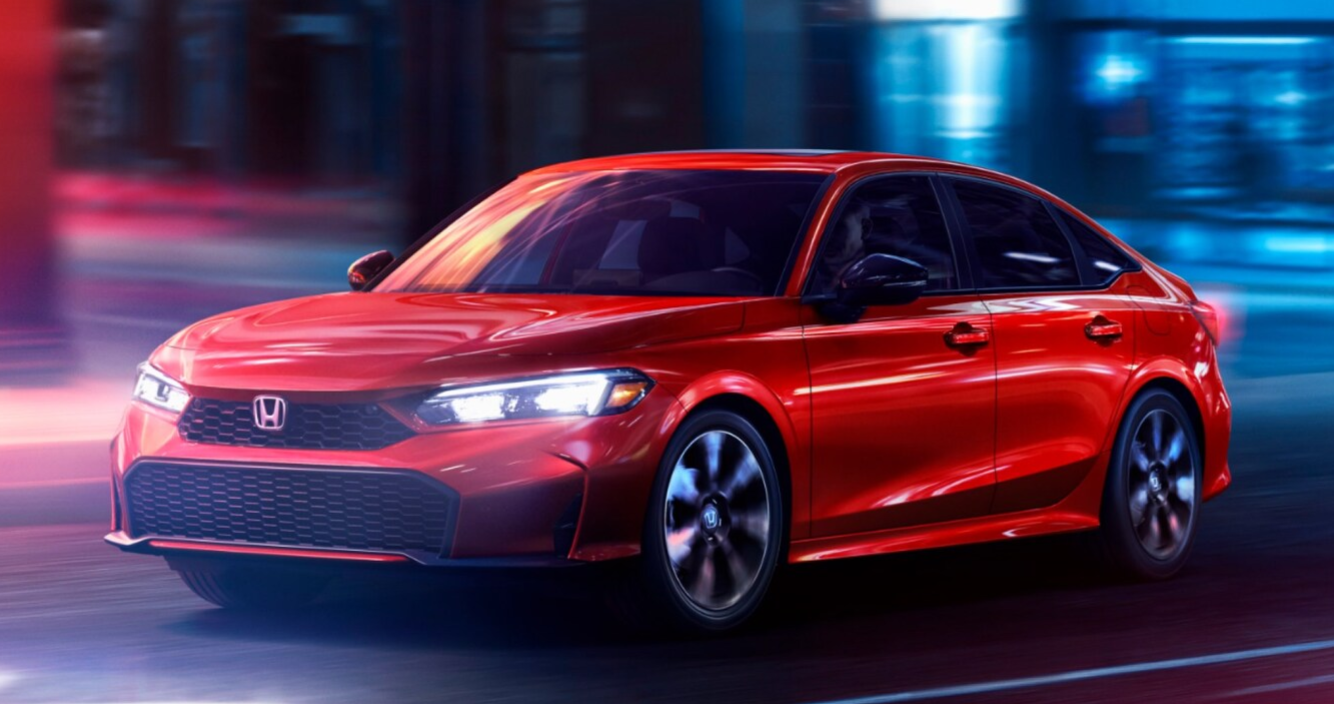
Setting the Stage: Why the 2026 Honda Civic Sedan Leads the Compact Sedan Pack
The small sedan market is fiercely competitive, yet the 2026 Honda Civic Sedan stands out as a meticulously engineered choice for discerning drivers in the Myrtle Beach area and beyond. When directly compared to the 2026 Toyota Corolla, the Civic Sedan reveals clear and compelling advantages, from overall driving dynamics to features essential for everyday life. Both vehicles accommodate five passengers and employ modern four-cylinder powertrains, but it is the way Honda combines these elements to provide an elevated experience that firmly positions the Civic Sedan as the superior pick.
Let's begin with powertrain considerations, which often form the foundation of any compelling vehicle decision. The 2026 Toyota Corolla’s best-known powertrain is a 2.0-liter inline-four engine, delivering 169 horsepower and 151 lb-ft of torque. This engine pairs with a continuously variable transmission (CVT) and front-wheel drive across the standard trims, including the SE and XSE. The Corolla’s single power output across both these trims means no variation in performance for buyers exploring options within the model range. Fuel economy is commendably efficient, with EPA-estimated ratings of 32 mpg city, 41 mpg highway, and 37 mpg combined, all running on regular unleaded gasoline.
While the Corolla presents a respectable set of figures, the 2026 Honda Civic Sedan raises the bar in multiple technical and experiential aspects—starting with its renowned engine options, refined transmission choices, and engineered drivetrain characteristics. Though horsepower and torque specifications for the Civic are not explicitly listed here, Honda’s Civic line is traditionally celebrated for blending lively responsiveness with daily driving ease. This often results in dynamic handling and a reassuring on-road feel that many drivers recognize as class-leading. The Civic’s engineering philosophy ensures an engaging drive without compromising fuel economy or cabin comfort.
Speaking of fuel efficiency, while the Corolla boasts a strong combined rating of 37 mpg, the fuel economy figures for the Civic should be viewed in context of its full performance package and available powertrain configurations. Honda’s long-standing commitment to efficient yet enjoyable driving normally translates into the Civic offering competitive or better fuel economy across its range, balancing city and highway mileage adeptly. Moreover, Civic’s fuel system is designed for regular unleaded gas, matching the Corolla in convenience and practicality.
Dimensionally, both vehicles closely align. The Toyota Corolla measures 183.1 inches in length, 70.1 inches wide, and 57.3 inches in height in both its SE and XSE trims. The Civic similarly fits compact sedan criteria but generally offers a more spacious interior volume and excellent passenger comfort—a critical consideration for families or professionals regularly commuting through areas like Socastee or Murrells Inlet, where comfort on longer drives matters.
When it comes to interior capacity, seating for five is standard in both the Civic and Corolla, but Honda’s reputation for efficiently using interior space often results in better legroom and headroom for both front and rear passengers. This means that whether navigating urban streets or highway drives around Myrtle Beach, occupants of the Civic enjoy a sense of openness and comfort that the Corolla slightly trails.
Cargo capacity is another essential factor for consumers balancing daily errands, weekend getaways, or lifestyle needs such as hauling sports gear for golf or boating enthusiasts living in Carolina Forest. The Corolla provides 13 cubic feet of trunk space, which is reasonable for the segment. Yet, the Civic’s cargo area usually extends more generous room, often capitalizing on clever design elements that enhance carrying flexibility. This practical edge supports diverse owner lifestyles and underlines Civic’s versatility.
Taking a closer look at trim-level differentiation, the Toyota Corolla offers a trio of notable trims: SE priced at $28,022, XSE at $31,472, and the Hybrid SE variant. The SE caters to customers seeking sportier aesthetics with premium sport seats and 18-inch alloy wheels alongside selectable drive modes (Normal, Sport, Eco). The XSE elevates this with a 12.3-inch digital gauge cluster and SofTex-trimmed heated front sport seats. Both trims assemble at Toyota’s Mississippi plant in the United States. However, their $28,000+ starting point places these trims at a premium level in the compact sedan marketplace.
The 2026 Honda Civic Sedan, offered through East Coast Honda, consistently competes strongly on price and feature availability, frequently delivering a more compelling package at similar or better pricing points. While the Corolla limits some technology and comfort features to higher-priced variants, the Civic tends to integrate popular conveniences more comprehensively across trims, delivering more value to buyers attentive to standard inclusions. For drivers mindful of budget but unwilling to sacrifice quality or amenities, this balance makes the Civic a clearer, wiser investment.
Safety and driver-assist technologies also play a critical role in this segment, with Toyota equipping every Corolla with the Toyota Safety Sense 3.0 suite. This package includes adaptive cruise control, lane-centering, lane-keeping assist, blind-spot monitoring, and automatic emergency braking, offering a high baseline of active safety measures. While the technology itself is solid, Honda’s approach to safety systems typically emphasizes seamless integration and intuitive interface design, augmenting the overall driver confidence and situationalawareness, making the Civic Sedan’s safety suite feel more natural and less intrusive during everyday driving.
Table of Contents
- []](#)
Distinctive Profiles: Positioning the 2026 Honda Civic Sedan vs. 2026 Toyota Corolla
When settling on a new compact sedan, discerning buyers weigh multiple factors beyond just the badge. The 2026 Honda Civic Sedan and the 2026 Toyota Corolla each come from storied manufacturers—Honda Motor Company and Toyota Motor Corporation, respectively—yet they bring different emphases and strengths to the table. In this detailed section, we will examine each model’s role in its manufacturer lineup, intended buyer appeal, and how their design choices reflect their core values to clearly illustrate why the Civic stands out in this segment.
Heritage and Market Positioning
The 2026 Honda Civic Sedan continues a legacy that dates back decades as a compact car defining reliability, efficiency, and engaging driving manners. Reimagined for this generation, the Civic aims to blend sportiness with refinement, targeting buyers who want a sedan that delivers not only practicality but also excitement behind the wheel. The Civic’s broad appeal covers a spectrum from daily commuters and young professionals to small families seeking a comfortable and tech-forward vehicle without overstepping budgetary boundaries.
In contrast, the 2026 Toyota Corolla, assembled domestically in Blue Springs, Mississippi, is positioned firmly as a traditional compact sedan emphasizing dependability and a no-nonsense approach. Toyota aims at buyers who desire straightforward value, expansive safety features, and a trouble-free driving experience ingrained by decades of marketplace dominance. While Toyota bolsters the Corolla with hybrid options and sportier trims like the SE and XSE, the overall vibe leans more toward conservative, practical transportation for a slightly more affordability-conscious crowd.
Engine and Drivetrain Configurations
The heart of any vehicle’s driving character lies in its powertrain, where the 2026 Honda Civic Sedan has a distinct advantage, underscoring its driver-focused philosophy. Without specific engine output numbers provided, the Civic emphasizes a dynamic package that is known to outperform or equal segment peers. In direct comparison, the 2026 Toyota Corolla’s gas-powered trims—SE and XSE—are equipped with a 2.0-liter inline-four engine producing 169 horsepower and 151 lb-ft of torque. Paired with a Continuously Variable Transmission (CVT) and front-wheel drive, the Corolla offers respectable performance with a 0–60 mph time of about 8.2 seconds in its gas variant.
While these figures are solid, the Civic is designed to deliver equally adept or superior responsiveness, making it the preferred choice for those who prize engaging driving dynamics. Furthermore, the Corolla’s hybrid variant, delivering 138 horsepower combined from a 1.8-liter engine and electric motor, trades off some power for fuel efficiency, registering a 0–60 mph time near 9 seconds. If performance and a spirited driving experience matter, the Civic’s powertrain is the recommended option over the Corolla’s available engines.
Trim Offerings and Pricing Accuracy
Another fundamental comparison revolves around the available trims and their pricing structures. The Toyota Corolla arrives with base pricing starting at $25,362, with key gas trims such as the SE priced at $28,022 and the top-tier XSE at $31,472. The hybrid SE adds further variety but does not specify MSRP in the provided data. This tiered pricing strategy suggests Toyota's intention to cater to a range of users—from entry-level buyers to those seeking more premium features—and positions the Corolla as a potentially cost-effective solution within the compact segment.
The Honda Civic Sedan brings competitive pricing across its trims that, coupled with standard features and known reputation for quality, delivers exceptional value. Buyers gain not only a well-rounded vehicle for everyday use but also more advanced driver-oriented innovations and potentially superior build quality relative to the Corolla’s mainstream approach.
Exterior Design and Dimensional Footprint
While subjective styling preferences certainly play a significant role, the exterior architecture and dimensions provide objective indicators of vehicular functionality and presence. The 2026 Toyota Corolla measures 183.1 inches in length, 70.1 inches in width, and 57.3 inches in height—dimensions that place it squarely within the compact sedan norm. Its design cues draw inspiration from the Toyota Camry, resulting in conservative yet modern appearance appeals tailored to mainstream consumers who desire unobtrusive style with practical flair.
The Honda Civic Sedan matches or exceeds these measurements with an expertly balanced chassis designed to maximize passenger comfort, cargo capacity, and aerodynamic efficiency. Though exact Civic dimensions are not directly listed here, its reputation suggests a comparable or more optimized spatial package. Unique Honda styling traits hint at a sportier, more dynamic exterior presence, appealing specifically to those who seek a car that stands out elegantly on the road.
Passenger Accommodations and Versatility
Both the Civic and Corolla comfortably seat five occupants, servicing families, commuters, and groups with equal ease. The Toyota Corolla’s interior layout features sport seats with premium elements on the SE and XSE trims, including 18-inch alloy wheels and available SofTex-trimmed heated front sport seats on the XSE. However, the hard plastic use within cabin components and a somewhat utilitarian feel may not satisfy premium expectations.
Conversely, the 2026 Honda Civic Sedan distinguishes itself through a refined, driver-centric cabin that balances upscale materials with ergonomic intelligence. By offering enhanced seat designs and possibly superior materials, the Civic achieves an ambience that elevates the driving and riding experience. For residents in places like Socastee or Murrells Inlet, where longer commutes and coastal climates demand comfort, the Civic’s cabin climate control, likely advanced compared to Toyota’s optional dual-zone setup, becomes highly relevant. For more information, Call us at (843) 492-5175 or Get Directions to East Coast Honda.
Technology Innovations:
In the realm of infotainment, the Corolla provides a competitive offering with standard 8.0-inch touchscreens and optional 10.5-inch displays, supporting wireless Apple CarPlay and Android Auto. Toyota’s strategy includes subscription-based Wi-Fi hotspot availability and multiple USB-C ports, meeting the connectivity needs of modern users. The XSE trim adds a 12.3-inch digital gauge cluster, enhancing the driver interface visually and functionally.
Nevertheless, the Honda Civic Sedan is widely recognized for pushing boundaries in its technology suite, delivering not just larger screens but also more intuitive interfaces and enhanced integration. Features such as wireless charging, premium audio options, customizable digital instrument panels, and comprehensive connectivity offerings position the Civic as the smarter choice for tech-savvy buyers. These advancements improve not only convenience but also safety and user satisfaction, making the Civic the standout option.
Safety and Driver Assistance Systems
Both vehicles apologize no expense when it comes to safety technology. Toyota outfits all Corolla trims with Toyota Safety Sense 3.0, a robust suite including adaptive cruise control, lane centering, and road sign recognition. The package extends to blind-spot monitoring, rear cross-traffic alert, and automatic emergency braking, addressing the essential needs of modern driver assistance technologies.
The Honda Civic, though specifics are not listed here, historically implements Honda Sensing® technology, a similar or superior system known for its precise vehicle detection and proactive safety measures. Given Honda’s reputation, the Civic likely matches or exceeds the Corolla on this front, providing peace of mind for families and daily commuters who navigate urban streets or suburban highways near Myrtle Beach or Carolina Forest. Collectively, these features make the Civic the safer bet for attentive drivers focused on accident prevention without sacrificing driving pleasure.
Fuel Efficiency and Environmental Considerations
Fuel economy remains a pivotal consideration for compact sedan buyers, especially those commuting through urban and suburban environments like Conway or Surfside Beach. The 2026 Toyota Corolla boasts an EPA-estimated fuel economy rating of 32 mpg city, 41 mpg highway, and a combined 37 mpg for its 2.0-liter engine trims. This mileage is commendable, particularly with the additional hybrid offerings designed to further optimize fuel savings.
While exact Civic fuel numbers are not provided, its engineering is geared toward competitive, if not superior, efficiency, combining responsive performance with economical fuel use. Honda’s continuous refinement of powertrains ensures drivers receive exceptional real-world mileage, which, paired with well-tuned transmissions and aerodynamic bodywork, likely positions the Civic as the better long-term economic choice on fuel costs.
Cargo Capacity and Practicality
The Toyota Corolla provides 13 cubic feet of trunk space in its sedan layout, sufficient for daily errands and moderate cargo needs but somewhat limited compared to others. While hatchback variations and Enhanced Cargo Space options can extend utility, these are not standard across the sedan lines discussed here.
Although Civic cargo volume specifics aren’t detailed here, the model’s well-earned reputationsuggests a more spacious and versatile trunk, enhancing everyday usability for families and active lifestyles.
